Cristiano Ronaldo built one of the most successful careers in football history. But beyond the goals, trophies and contracts, he has created something potentially even more enduring: a global brand. His story offers a lesson not only for athletes, but for anyone interested in building long-term commercial value.
In 2025, Cristiano Ronaldo's personal brand was valued at €850 million by the Portuguese Institute of Administration and Marketing (IPAM). In 2011, the same institute estimated its value at €24.5 million.
That's an extraordinary transformation.
But what interests me isn't necessarily the number. It's what sits behind it.
Ronaldo didn't simply become one of the world's most recognisable athletes. His sporting achievements became the foundation for something much broader: a commercial identity capable of extending into industries, markets and business opportunities far beyond professional football.
And that raises a question I've always found fascinating.
When does a successful individual become a valuable brand?
The Difference Between Being Famous and Being Valuable
Professional athletes have always attracted attention. Clubs promote them, broadcasters follow them, sponsors endorse them and supporters celebrate them.
But attention alone doesn't create a sustainable commercial asset.
Consider two footballers with similar sporting achievements, comparable audiences and equally impressive careers.
One approaches commercial opportunities individually. A sponsorship agreement here, a social media campaign there, perhaps an appearance or licensing deal when the opportunity arises.
The other thinks about the bigger picture.
What should their name represent? Which brands strengthen that identity? What kind of audience are they building? What opportunities could exist beyond their sporting career?
Both may be successful. Both may earn substantial money.
But only one is deliberately developing a commercial identity that can continue creating value over time.
Visibility gets you noticed. Positioning gives people a reason to remember you.
That distinction applies just as much to entrepreneurs, artists, creators and business leaders as it does to athletes.
Cristiano Ronaldo: From Footballer to Global Brand
The commercial evolution of CR7 offers an unusually clear example.
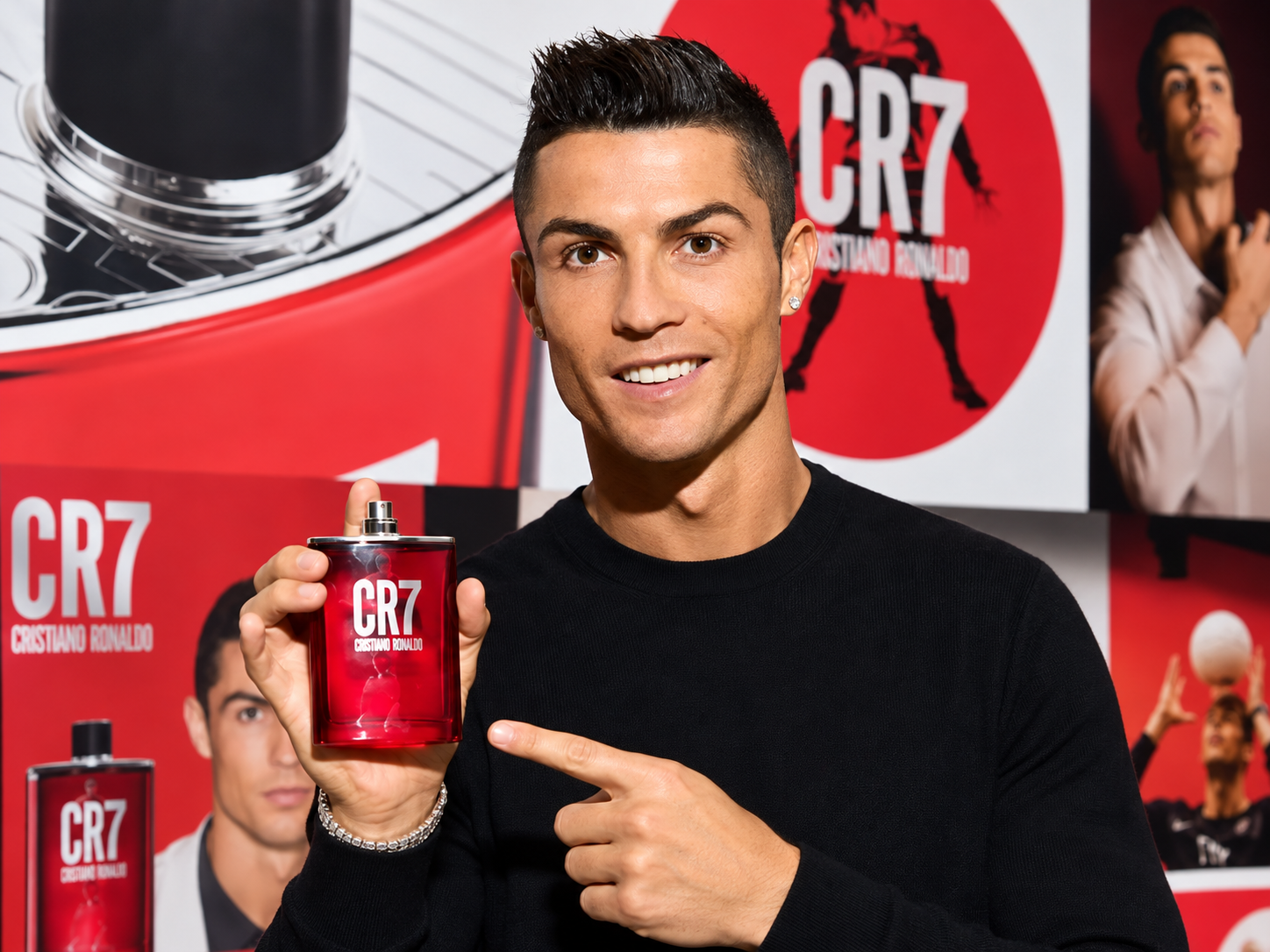
Ronaldo's name has expanded into fashion, fragrances, hospitality, health-related businesses and investments.
The Pestana CR7 hotel partnership connects his identity with travel and lifestyle. Insparya extends his business interests into healthcare and aesthetics. His consumer products bring the CR7 name into everyday purchasing decisions.
These activities differ considerably, but they share one commercial advantage: an established identity that millions of people already recognise.
That recognition can help a new venture attract attention faster than an unfamiliar business starting from zero.
It doesn't guarantee success. Products still need to deliver. Hotels need customers. Businesses require competent management and sustainable economics.
But a strong brand can make the introduction considerably easier.
This is where brand equity becomes commercially interesting.
An established name can reduce the distance between an unfamiliar product and a consumer's willingness to consider it.
Ronaldo demonstrates how sporting fame can create opportunities for commercial expansion. The value comes from translating that recognition into credible products, partnerships and businesses.
His football career created the audience. The CR7 identity created opportunities to serve that audience in entirely different ways.
680 Million Followers. One Extraordinary Distribution Channel.
Perhaps the most remarkable part of Cristiano Ronaldo's commercial success isn't the number of businesses associated with his name.
It's his ability to reach people.
As of October 2026, Ronaldo has approximately 680 million followers on Instagram, making him the most-followed individual on the platform.
Think about what that represents from a business perspective.
Traditional brands spend enormous amounts of money building awareness through advertising, media partnerships and distribution networks. Ronaldo has accumulated a global audience that actively chooses to follow him.
When he introduces a product, announces a partnership or launches a new business venture, he can communicate directly with an audience of extraordinary scale.
That doesn't mean every follower sees every post, or that attention automatically translates into sales. Instagram controls its algorithms, and access to an audience isn't the same as owning the platform.
But commercially, the advantage is significant.
Ronaldo doesn't just attract attention. He has a direct channel through which that attention can be mobilised.
For a sponsor, that creates immediate exposure to an established global community. For his own businesses, it offers an opportunity to introduce products without depending entirely on traditional advertising.
And for Ronaldo himself, it creates negotiating power.
He isn't simply providing his image to another company's campaign. He's bringing access to an audience, established recognition and the potential to influence consumer behaviour.
This is where the relationship between branding and distribution becomes particularly interesting.
A strong brand creates demand. A strong distribution channel helps turn that demand into action.
Together, they can become far more valuable than either would be independently.
The real commercial asset isn't the follower count. It's the ability to turn recognition into relationships, relationships into demand, and demand into measurable business.
That principle applies whether you have 680 million followers or 6,800.
Building an audience is one achievement. Developing a strategy that makes the relationship with that audience valuable over time is something entirely different.
A Brand Is More Than a Name or a Logo
One of the most common misunderstandings about branding is that it begins with visual identity.
A new logo. Better photography. A redesigned website. A more consistent Instagram feed.
These things matter, but they aren't the foundation.
Branding begins with understanding what you want to be known for, who you want to reach and why anyone should care.
Visual identity and communication then help express that positioning consistently.
For an athlete, the foundation might include sporting performance, personal values, personality, ambition and interests outside football.
For an entrepreneur, it could be a particular way of thinking, a field of expertise or an ambition to change an industry.
For a company, it's the relevance of its offering, the experience it delivers and the associations it develops over time.
Different starting points. Same underlying principle.
A brand is built through the associations people repeatedly make with you.
Those associations are influenced by much more than advertising.
The people you work with. The opportunities you accept. The subjects you speak about. The quality of what you produce. Even the opportunities you decline.
Everything communicates something.
Which is why branding isn't simply a marketing exercise. It's a series of strategic decisions that gradually shape how you're perceived.
Why Communication Needs a Strategy
I regularly come across businesses and individuals producing impressive amounts of content without any obvious connection between their activities.
They're visible. They're active. They're spending money.
But what are they actually building?
One week, communication revolves around an achievement. The next, a partnership. Then a product announcement, followed by something completely unrelated.
Each activity might make sense individually.
Together, however, they don't necessarily create a recognisable position.
This is one reason structured communication matters.
It gives individual activities a shared direction.
A photograph isn't simply content. It can reinforce a particular identity.
A partnership isn't necessarily just additional revenue. It can strengthen credibility within a new audience.
An interview shouldn't exist solely because someone offered media exposure. It can become an opportunity to communicate what you stand for.
The objective isn't to make every message identical.
It's to ensure that different messages contribute to a consistent understanding of who you are.
Consistency doesn't mean repeating yourself. It means reinforcing the same identity in different ways.
Without that structure, marketing becomes a succession of activities.
With it, communication can contribute to an asset that grows over time.
The People Behind the Personal Brand
We often describe successful personal brands as though they were created entirely by the individuals themselves.
And naturally, the individual is central.
Without the talent, personality, credibility or achievements, there may be little of substance to develop.
But building a commercial brand requires capabilities that are quite different from being exceptional at your profession.
Strategy. Creative direction. Communication. Commercial rights. Partnerships. Audience understanding. Reputation management.
A footballer shouldn't be expected to master all these disciplines while competing at the highest level.
Neither should an entrepreneur running a growing business or an artist focused on their creative work.
This is where having the right people around you becomes valuable.
An agent may negotiate a contract. A publicist may manage media relations. A designer creates visual assets. A commercial adviser identifies business opportunities.
All are important.
But someone also needs to understand how these activities connect.
That coordinating responsibility is frequently overlooked.
A structured brand team doesn't need to be large or expensive. It needs clear ownership, relevant expertise and a shared direction.
The question shouldn't simply be who can secure the next opportunity.
It should also be who is responsible for developing the long-term value of the name attached to it.
Partnerships Should Build More Than Revenue
Sponsorship remains one of the most visible ways athletes monetise their profiles.
For many, it provides a meaningful source of income alongside their sporting contracts.
But the commercial value of a partnership should never be measured entirely by the fee.
Think about the difference between promoting a product for a short campaign and establishing a long-term association with a company whose identity complements your own.
The first generates income and exposure.
The second can potentially influence how both brands are perceived.
It can create credibility, introduce new audiences and open opportunities that wouldn't otherwise exist.
This is why partnership selection deserves strategic attention.
A profitable deal isn't automatically a good brand decision.
Certain collaborations strengthen an identity. Others confuse it.
For athletes with growing public profiles, the challenge isn't always finding companies interested in working with them.
It's understanding which relationships are worth building.
The same is true for businesses.
Not every available opportunity deserves to be pursued.
The most valuable partnership isn't necessarily the one that pays the most today. It's the one that contributes the most to what you're building.
What Happens When the Career Ends?
Sport introduces an interesting limitation that most other industries don't face in quite the same way.
An athlete's professional career has a relatively short window.
Performance changes. Contracts expire. Public attention moves towards emerging talent.
But a well-established commercial identity doesn't necessarily disappear when competitive performance ends.
It can evolve.
That evolution is easier when the brand has developed associations beyond sporting results.
An athlete known exclusively for performance may find it difficult to maintain commercial relevance after retirement.
Someone who has also developed a credible identity around business, leadership, lifestyle, entertainment or another field may have more opportunities to remain relevant.
This doesn't mean every player needs to launch a fashion label or invest in hotels.
In fact, forcing commercial extensions without a credible connection to the individual can undermine the very brand they're trying to build.
It means recognising that a career and a brand operate on different timelines.
One is built around a period of professional performance.
The other has the potential to evolve throughout a lifetime.
The Lesson Extends Far Beyond Football
What makes Ronaldo's story particularly interesting is how applicable the underlying principle is outside sport.
Entrepreneurs frequently spend years building companies while neglecting the commercial value of their own reputations.
Creative professionals develop distinctive perspectives without establishing a clear identity around their work.
Founders build impressive products but struggle to communicate why their approach is different.
Even established businesses sometimes confuse continuous marketing activity with genuine brand development.
The common problem isn't necessarily a lack of ambition or talent.
It's a lack of structure.
People become so focused on delivering today that they rarely consider what their communication is building for tomorrow.
And that's an expensive oversight.
Because reputation, trust and recognition accumulate gradually. They can't always be created immediately when a business opportunity appears.
The earlier you understand what you want to represent, the more deliberately you can develop it.
That doesn't require becoming famous.
It requires knowing what makes you relevant and communicating it with enough clarity and consistency that other people begin to recognise it too.
Stop Thinking About Branding as a Cost
Perhaps the biggest shift is to stop treating branding as something you spend money on only when you have something to promote.
A strong brand influences far more than awareness.
It can support pricing power, attract partnerships, strengthen recruitment, increase customer preference and create opportunities for expansion.
None of those outcomes is guaranteed. They depend on what the business or individual actually delivers.
But a clearly positioned brand gives those activities a common foundation.
This is why I believe communication deserves a more strategic role, whether you're building a company, developing a career or launching a new venture.
Not because everyone needs more marketing.
Quite the opposite.
Most people would benefit from fewer disconnected activities and a clearer understanding of what they're trying to achieve.
Ronaldo's €850 million brand valuation is extraordinary. It's also an estimate of his wider commercial influence, not a price someone has agreed to pay for the CR7 name.
But the precise figure isn't the most important lesson.
What matters is the transformation from recognition into an identity with commercial applications beyond the original profession.
It demonstrates the potential of thinking about a name as something to develop, protect and build around.
Because building a brand isn't about looking successful today. It's about creating something that becomes more valuable tomorrow.
And that begins with the decisions you make about how you communicate today.
■